
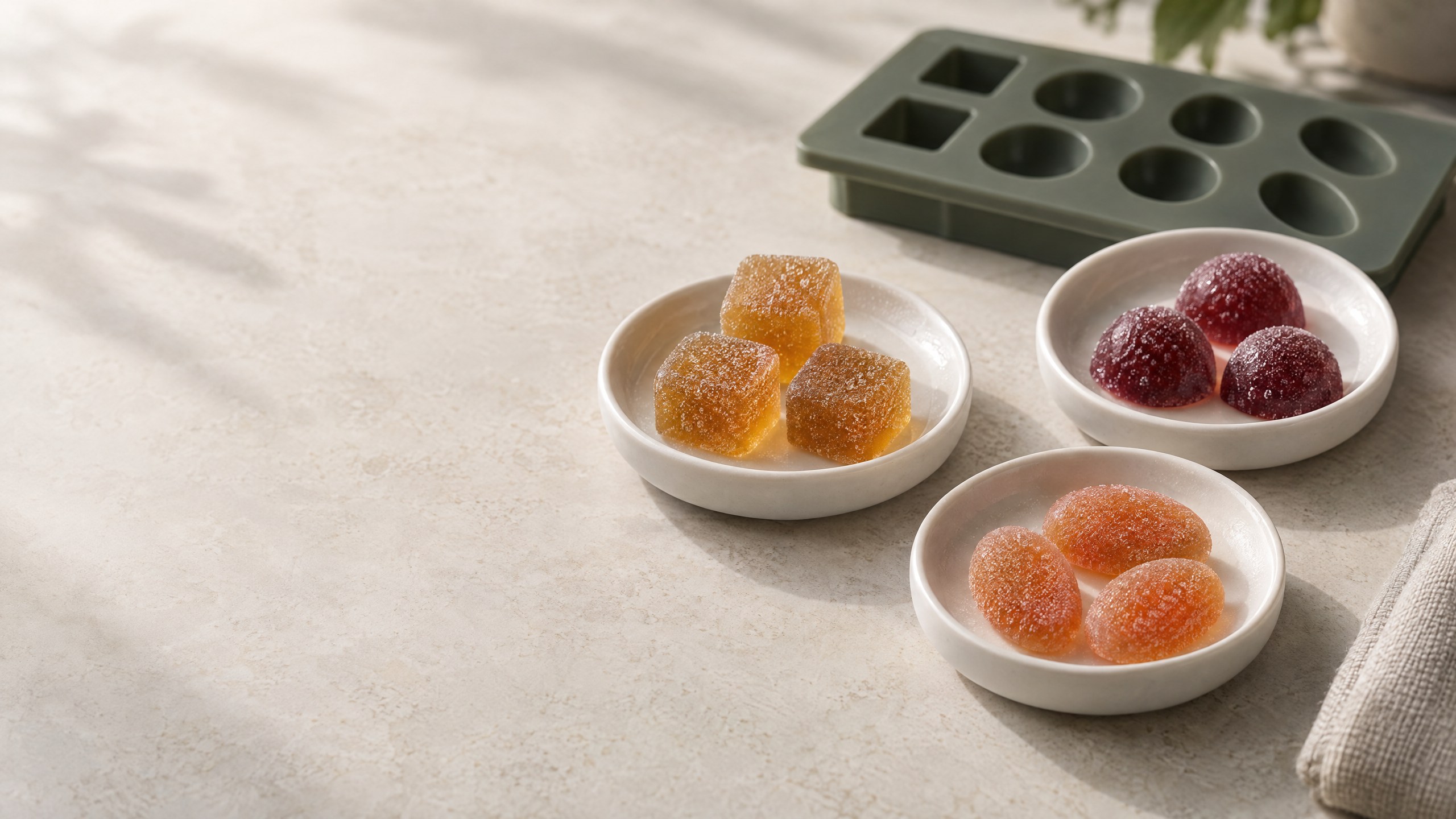
Stock CBD Gummy Shapes vs. Custom Molds: What Brands Should Compare
A cube, a dome, or a distinctive custom shape can give your CBD gummy a different visual identity. But the shape decision belongs in the manufacturing brief, not just the brand mood board. The finished piece must work with the formula, intended size, and packaging configuration.
For businesses evaluating a CBD gummy manufacturer, the useful comparison is not simply “standard versus unique.” It is whether an existing shape meets the product requirements or whether a custom mold has a clear purpose worth assessing. Sawyer Labs lists cubes, bears, and domes as stock shapes and offers custom-mold design as part of its gummy options. Availability and project fit should be confirmed with the team.
Stock shapes and custom formulas are separate choices
A stock shape uses an existing mold design. That does not necessarily mean choosing a stock formula. Your brand may want an existing silhouette while exploring a different flavor, extract type, or target cannabinoid content.
Likewise, a custom mold does not resolve the rest of the formulation work. It defines a physical design that still needs to fit the proposed product and production process. Sawyer Labs offers private label development, white label formulas, and bulk programs, with customization options covering shape alongside flavor, potency, and packaging. Ask which combinations are available for your project rather than assuming every catalog formula can use every mold. This distinction helps keep the brief focused: decide what needs to be custom, and what can remain an existing option.
Give a custom shape a specific job
Start with the reason your brand wants a different silhouette. Perhaps the piece is a recognizable part of the product identity, or an existing shape does not fit the physical specifications you have in mind. Explain that purpose before requesting a design. If a stock option meets the brief, evaluate it seriously. A custom shape is not automatically a better product, and a stock shape does not prevent differentiation through other product choices. For an existing line, consider whether the new design creates a meaningful distinction or simply another variation to manage. Our guide to planning a CBD gummy product line explains why each proposed item should have a defined role. A useful design request describes the intended outcome. “We want a compact, recognizable piece” gives the manufacturer more to assess than “make it look premium.”
Review size and detail before treating a sketch as final
Bring a dimensional concept, not just a flat logo or reference image. Identify the intended overall size and thickness, then ask the manufacturing team which details are feasible for the proposed gummy. If your design includes an embossed mark, narrow sections, or a textured surface, discuss how those features would be evaluated. Do not assume that a detail visible in a rendering will remain equally clear in the finished piece. Agree on what successful execution means. That might include recognizable edges, a readable design feature, or an approved overall profile. The exact acceptance criteria should come from the project review, not an expectation created by a digital mockup. Keep alternatives available. A simpler silhouette may satisfy the same brand objective if the original concept requires changes.
Keep shape, formula, and cannabinoid content aligned
A larger mold is not a potency specification. State the target cannabinoid content per gummy separately from the physical dimensions. Ask the team to assess those requirements together rather than assuming the current recipe can simply be placed in a different cavity.
Shape approval also should not replace evaluation of flavor and texture. The finished product needs to meet the full brief, including how the gummy feels and handles, not just how it photographs. Sawyer Labs describes R&D as reviewing formula, gummy size, flavor, and production requirements before scaling. Its article on CBD gummy R&D and manufacturing explains why those decisions belong together. Record the agreed shape and formula revision together so later adjustments are visible to everyone approving the product.
Check the shape in the intended package
Evaluate the proposed gummy with the actual finished-unit plan. Confirm the piece count, container opening, and available space. Ask what checks are appropriate for filling, handling, and maintaining the intended appearance after packaging.
If you are keeping an existing container, do not assume the same gummy count will fit after a shape or size change. Review the configuration before treating the package as approved. Sawyer Labs lists bottles, jars, and single-serving pouches, with label design and application support. Confirm the specific components and services available for your project. This is a product-fit review, not a claim that one shape provides better protection or longer shelf life. Any storage or shelf-life statement needs appropriate support for the finished formula and package.
Put custom-tooling responsibilities in writing
Before committing to a custom mold, clarify the development scope and commercial terms. Discuss who approves the design, what revisions are included, and how a change after approval would be handled.
Also settle ownership and access. Who owns the tooling? Where is it stored? What happens if replacement is needed or the manufacturing relationship ends? If exclusivity matters, confirm exactly what the agreement covers. Sawyer Labs advertises custom molds, but its product page does not establish your project’s tooling costs or ownership terms. Obtain those details in the proposal and agreement. Minimums and timelines should also be confirmed for the actual formula and packaging configuration.
Do not assume a stock shape eliminates development work or a custom shape carries a guaranteed delivery date.
Frequently asked questions
Can I develop a custom CBD formula in a stock shape?
Discuss that combination with the manufacturer. Shape and formulation are separate decisions, but the available pairing depends on the project and manufacturing program.
Does a custom mold mean my brand owns it?
Not automatically. Confirm ownership, exclusivity, access, and any transfer rights in the written agreement before committing.
Does manufacturing approval mean the gummy can be sold?
No. The FDA’s published position excludes CBD from the dietary supplement definition and prohibits introducing food with added CBD into interstate commerce. Obtain qualified review of current federal and applicable state requirements before commercialization.
Discuss your CBD gummy shape with Sawyer Labs
Start with the product requirements, then compare the existing shapes with a custom concept. A clear purpose, dimensional brief, and agreed tooling scope give your manufacturing partner a practical basis for assessment.
Contact Sawyer Labs about your CBD gummy manufacturing project to discuss stock shapes, custom molds, formulation goals, and packaging needs
References
Sources reviewed October 28, 2026: Sawyer Labs’ current gummy product page 1, its R&D and manufacturing article, the live product-line planning article 3, and FDA guidance
